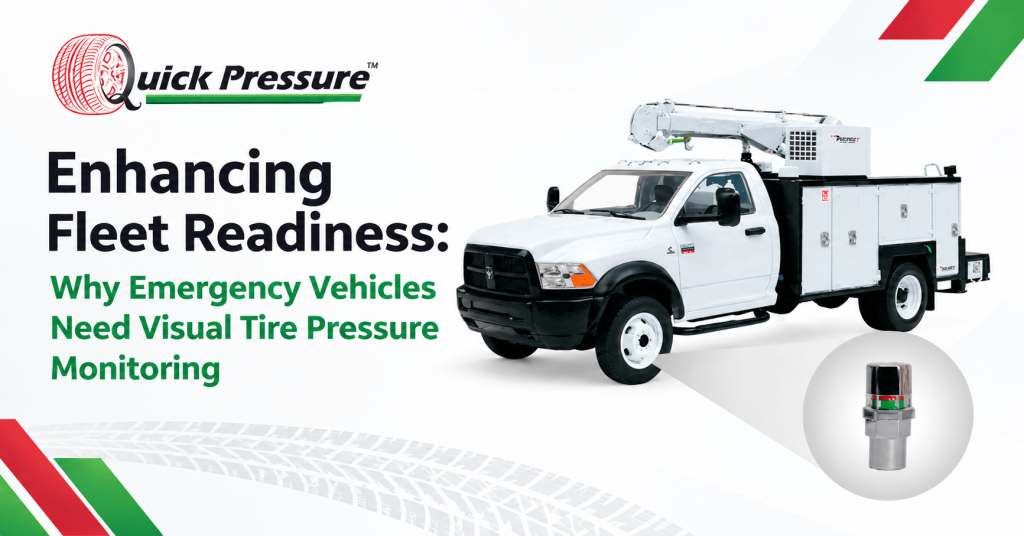
Enhancing Fleet Readiness: Why Emergency Vehicles Need Visual Tire Pressure Monitoring
When emergency medical services, fire departments and police units respond to a call, every second counts. Fleet managers and first responders need to know that every vehicle is ready to go at the minute a call comes in. Pre-shift checks go at a quick speed and while engine maintenance and key equipment are routinely checked, one vital thing is often missed: correct tire pressure.
Heavy emergency response trucks with under-inflated tires are less able to maneuver, take longer to stop and are at far greater risk of catastrophic high-speed blowouts. Fleet safety & response readiness calls for a trusted, instant inspection solution.
First Response Fleets Face Dangers from Incorrect Tire Inflation
Huge specialist vehicles like fire engines, ambulances and police cruisers work in tough driving conditions. The safety and performance of the vehicle are closely tied to correctly inflated cold weather tires.
- Handling and Vehicle Control: Low tire pressure reduces the sidewall stability of the tire, causing the tire to wobble and the steering to be slow and unresponsive while turning corners abruptly or changing lanes suddenly at emergency speeds.
- Braking performance: The wrong pressure affects the tire’s contact patch with the road, leading to greater stopping distances on wet or dry surfaces.
- Blowouts Waiting To Happen: Low pressure creates excessive internal friction and heat build-up in huge commercial tires, making blowouts a much more likely risk on high-speed dispatches.
- Operational Downtime: A tire blowout on a critical medical transport or fire call leaves the vehicle immobile, endangering public safety.
How fast do pressure visual monitoring valve caps work?
Handheld tire gages require manual pressure checks that waste valuable time and may result in missed inspections during busy shift changes. Check the tires by just looking at the visual monitoring valve caps.
- Establish PSI Level Target.
Choose monitor caps that match the vehicle manufacturer’s stated cold pressure rating (pressure ranges available up to high-PSI commercial levels).
- Easy Thread-On Installation.
Screw the monitoring caps directly onto each tire valve stem. The internal pressure sensor of the valve will be automatically plugged into the valve core.
- Visual status at-a-glance
A green indication means the tire is at or above full service pressure. If the pressure drops 10% or more, the indicator becomes red, giving an instant visual warning of a leak or underinflation.
Key Advantages for Municipal and First Responder Fleets
For emergency services, direct visual surveillance systems offer distinct operational advantages:
- Fast Pre-Shift Inspections: Drivers and fleet technicians may inspect all tires on a fleet in seconds during walkarounds without pulling out air gages or removing caps.
- Strong Duty Commercial Construction: Built to stand up to strong road vibration, extreme weather, road salt and tough working conditions.
- No Batteries or Wiring Required: Mechanical visual indicators operate 24/7 without having to change batteries, recalibrate software or deal with tricky electrical wiring.
- Better Fuel Economy & Tire Life: Properly inflated heavy fleet tires provide less rolling resistance. This causes quicker tread loss and less fuel usage.
Conclusion: Prioritize Fleet Safety and Response Time
In emergency response, vehicle reliability is critical. Equipping ambulances, rescue trucks, and patrol units with visual tire pressure monitoring caps turns routine maintenance into a fast visual check, helping prevent tire-related incidents before vehicles leave the station.
Ready to upgrade your emergency fleet’s tire monitoring protocol?
Explore specialized heavy-duty and emergency response tire monitoring solutions at Quick Pressure Emergency Vehicles to equip your response vehicles with reliable visual monitoring today.
Get In Touch
Reach out to our team for product questions, support, or general inquiries. We’re here to help.